

I feel like I am supposed to have something important to say, it being the end of a whole year and all. And for sure I have a lot of thoughts in my head as I always do, but they continue to swirl and twirl and not slow down enough for me to grasp one and elaborate on it. Does this happen to you? Do you have a constant stream of words rushing around in your brain literally every waking minute? I have been this way as long as I can remember, even when I wake in the middle of the night. It is exhausting. At 2:30 this morning I was trying to figure out how to give one of my chickens a bath. I’ll let you know how that turns out.
I’ve been thinking about the past year as we do in December and trying to distill it into a few themes and have had zero success. (Using the word distill makes me think of my daddy.) As much as I try to incorporate reflection in my life, it doesn’t really work—maybe because I am stuck in survival mode. But I do have a thought after this very long year.
Two nights ago I started putting together english muffin dough, which I do after dinner so it can ferment all night, then be shaped and cooked in the morning. I was making a double batch so I got out the big bowl.
First I reached for the half-gallon jar of sourdough starter in the back of the fridge. I looked at the level and knew that after I removed what I needed for the english muffins, I would have to feed it before I could make bread the next day.
Measure out starter and put it in the big bowl. Then add warm water to the starter jar, stir, and add flour. Oh wait, first I need to refill the flour canister from the five-gallon buckets in the pantry. Now add flour to the starter, stir, and loosely cap the jar. Set on the counter in the laundry room.
Next in the big bowl is milk, two cups. Pour the first cup, then realize there is not another full cup in this jar of milk. Grab the next jar out of the fridge, but I haven’t yet skimmed the cream off this one and if I want to make butter tomorrow I need to do that first. Grab the small ladle and a clean quart jar. Skim cream. Label and put cream in fridge. Measure out the second cup of milk.
By now at least twenty minutes have passed and I have only two ingredients in the big bowl. Do you see what I see? (Did you sing that?)
When we make everything from scratch—truly from scratch—it takes an enormous commitment of time. Ben cares for the cow, gives her hay, drives to the feed store to get specific high-protein feed to lure her into the head gate, provides fresh water, keeps her healthy. Then he milks twice a day. He brings a big can of milk into the kitchen and I strain it into jars, label with the date, and put them in the refrigerator. Then I disinfect all the equipment. It’s a whole thing, morning and evening.
If I want butter, I have to skim some cream off each jar of milk and store it separately until I have a full quart. After witnessing the mess of making butter in a KitchenAid, and almost losing my right arm to an old-fashioned crank-style churn, I had the good sense to buy an electric butter churn on Amazon.
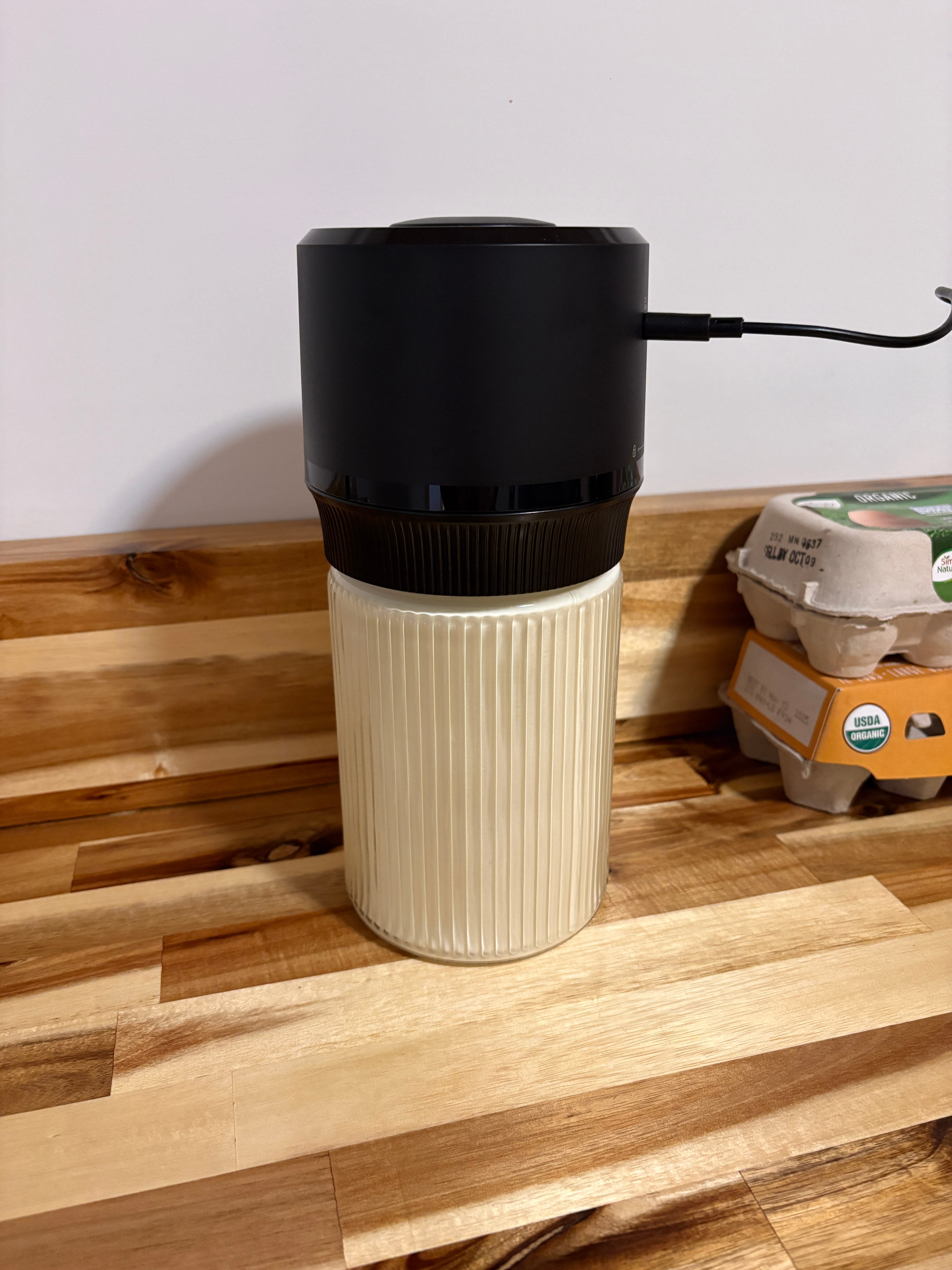
But still, there is effort involved. The electric churn takes about an hour, and you can’t walk away because when the butter “makes,” you have to be there to shut the machine off so it doesn’t over-churn (whatever that is). Then you drain off the liquid, wash the butter in ice water until you’ve removed all the “buttermilk” (which is not actual buttermilk, but that’s what the old-timers call it), then work salt into the butter if you want any joy in your life. Please don’t eat it unsalted. Ew.
Now you may butter the bread you start at 7 am and finally bake at 5 pm.
We have been raising cows and chickens for a few years now and added milking just this year. We started this mostly because Ben decided at 55 he wanted to be a farmer, but also because we want more control over our food supply. I’ve talked enough about it here that you understand the amount of work involved.
But the added benefit I am only now realizing is that it is producing slowness in my life. That can be difficult to understand and even see. I am busier now than I’ve ever been, and there is always a to-do list waiting. Sometimes—often—I get impatient at how long things take, especially when the kitchen canisters have to be replenished from the buckets in the pantry.
But producing food this way forces me to slow down and be present, to feel the change in the butter’s consistency as I wash the milk out and squish the salt in. It allows me to notice the crispness of the outside and tenderness of the inside of an english muffin that Thomas’s wishes they had. There is something very grounding about looking at your plate and realizing you grew everything on it. Remembering the days last summer of weeding and nurturing and picking and canning, the fiasco of raising chicks in the basement (which you will never do again)
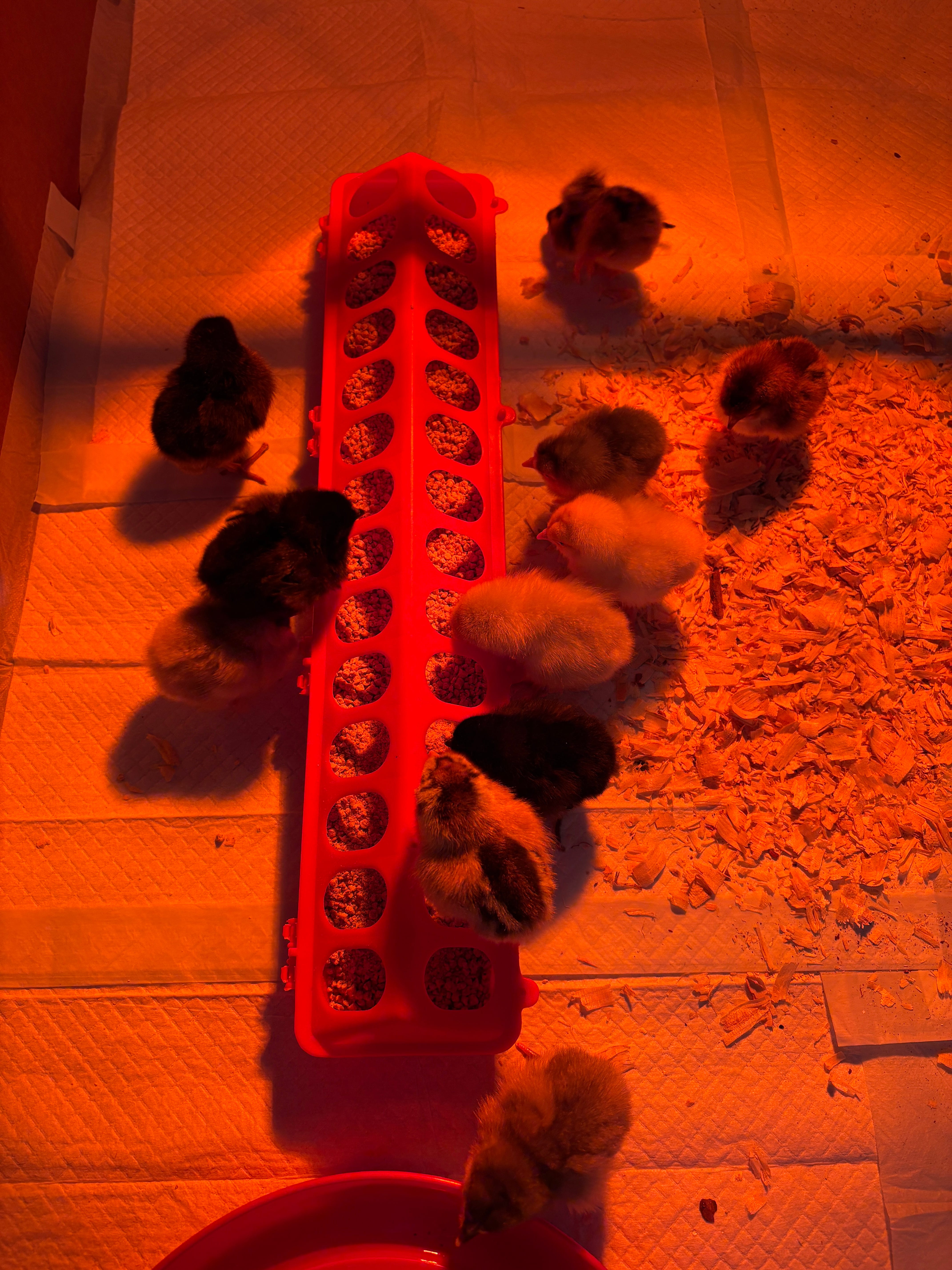
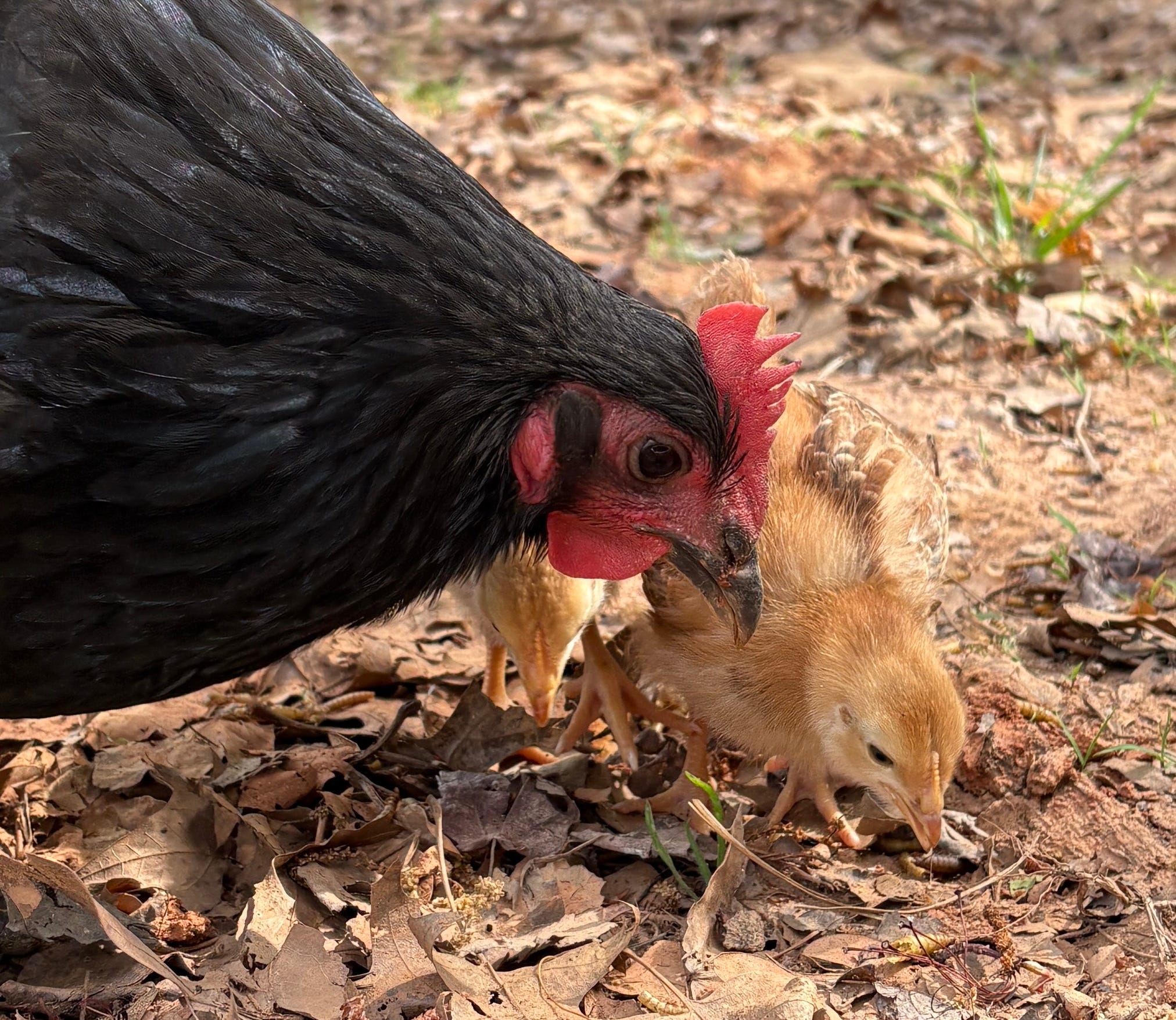
and trying to integrate the new ones into the existing flock without them all killing each other,
the days of sweating every calf that was born and hoping the mama wouldn’t be stupid and let it get under the fence to be eaten by vultures.

It has dawned on me that this is what my therapist was talking about. Noticing. Being present. Grounding in this moment. Who knew it took all this work? But God is faithful and will give you the circumstances you need even when you fight them tooth and nail.
Slow food is satisfying in a way I could not have imagined, and I am thankful that God allows us to grow as much as we do. When you’ve done all the labor of bringing food from its natural state to the table, you tend to savor it a little more. You pay attention to the flavors and colors and textures, and it’s a lovely way to enjoy a meal.
This is a good one, but really, they all are.
Thanks for sharing! That's so me! But such a sense of satisfaction, knowing the food I'm giving my dear ones is making them healthier!