Since I began having Epstein-Barr Virus flare-ups in January, my energy level has slid pretty low on the feel-like-it scale. Invariably that leads to doomscrolling, but since I don’t like to admit doom into this mind that’s already prone to rumination, I try to keep my input upbeat. I’m selective about who I follow and what I allow in.
One of the accounts that pops up pretty often on my Instagram feed is called @soulmindhub. The account’s tagline says “Manifestation | Abundance | Mindset.” What really drew me in was the mindset part. There is actual scientific proof that how you think affects your physical body. God also has some things to say about it, and I love when science catches up to the Bible.
Anyway, recently I saw a post that didn’t teach me anything I didn’t already know, but it verified what I have felt in my body literally since birth. And just in case you’ve never heard of this or wonder if maybe you might also be a highly sensitive person, I’ll share the slides here with my comments.
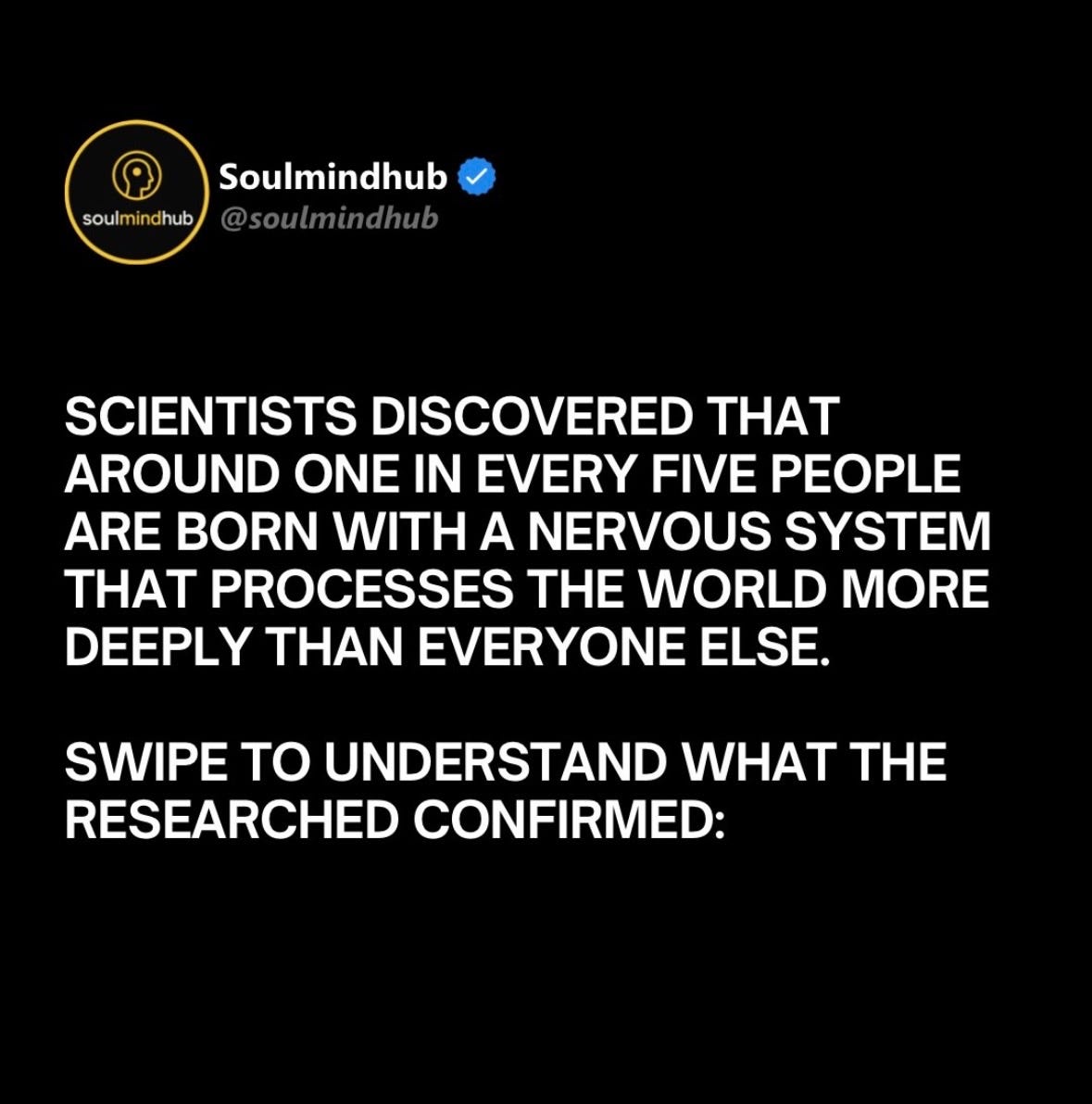
That’s about 20% of all people worldwide. Not a big enough percentage to be common, but enough that we HSPs can know we aren’t the only ones to feel the way we do.
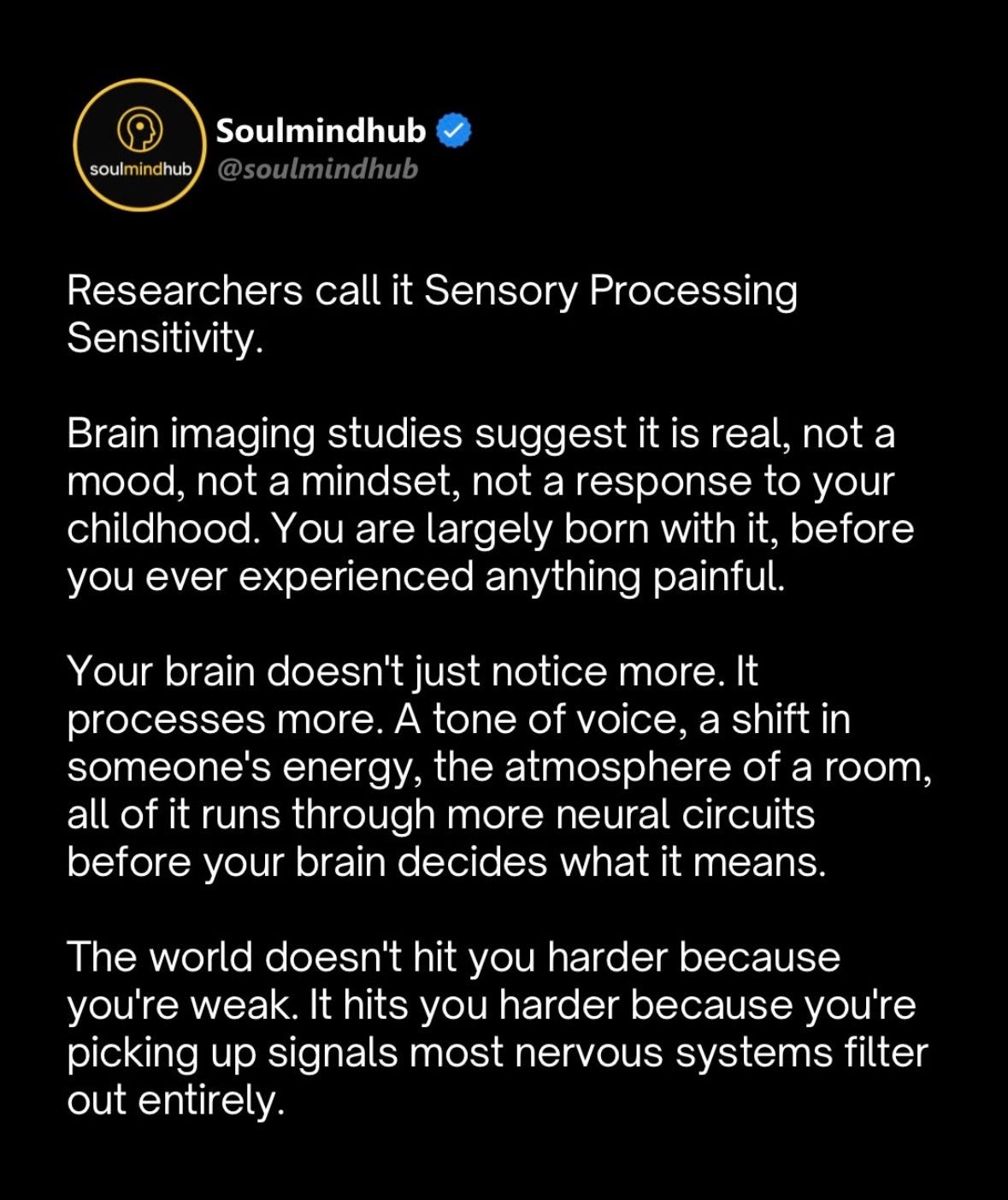
When Dr. Elaine Aron began researching high sensitivity in 1991, she referred to us as highly sensitive people. Since then the technical name of this trait has been changed to Sensory Processing Sensitivity.
But before we go any further, let’s define the term “process” as best we can. Think of mental and emotional processing like digestion. Your body takes in food and has to do something with it. Your teeth grind it and your saliva adds some enzymes, it travels to your stomach where acids are introduced and more mashing takes place, then it travels through the small and large intestines where nutrients are absorbed, and finally the waste is expelled.
When you experience an event, your mind takes in the data and—assuming you are in a safe environment—breaks it down. You feel the feelings, understand the facts, and assign meaning to all the little parts you’ve noticed. A highly sensitive person (HSP) feels the feelings more deeply, notices many more little parts than the average person, and assigns more meaning. Are you exhausted just thinking about it? Welcome to my world.
Let’s go on.
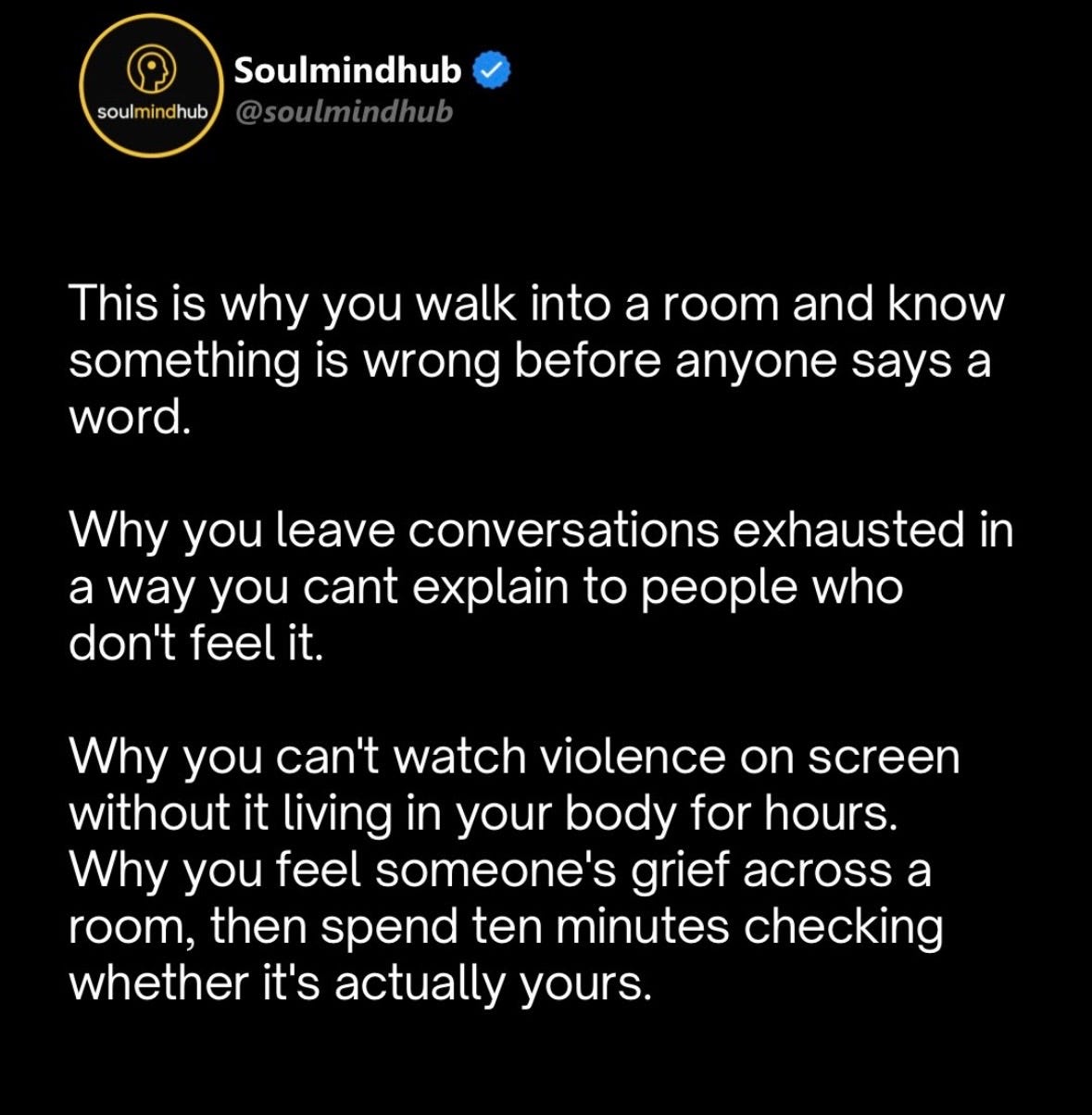
For years I thought I was crazy for being able to tell when there was tension in a room without anyone saying anything. This is where the term “vibe” comes from. I pick it up before I even know who’s there.
Regarding violence, in 1997 I watched the movie Air Force One with Harrison Ford playing the president. There was a scene where one of the hijackers held a gun to the president’s daughter’s head and threatened to shoot her if he didn’t give them what they wanted. I physically felt like I was going to throw up while watching that and had to look away. I couldn’t sleep that night. All these years later, I can still see the scene in my head and feel the panic in my chest and stomach just thinking about it.
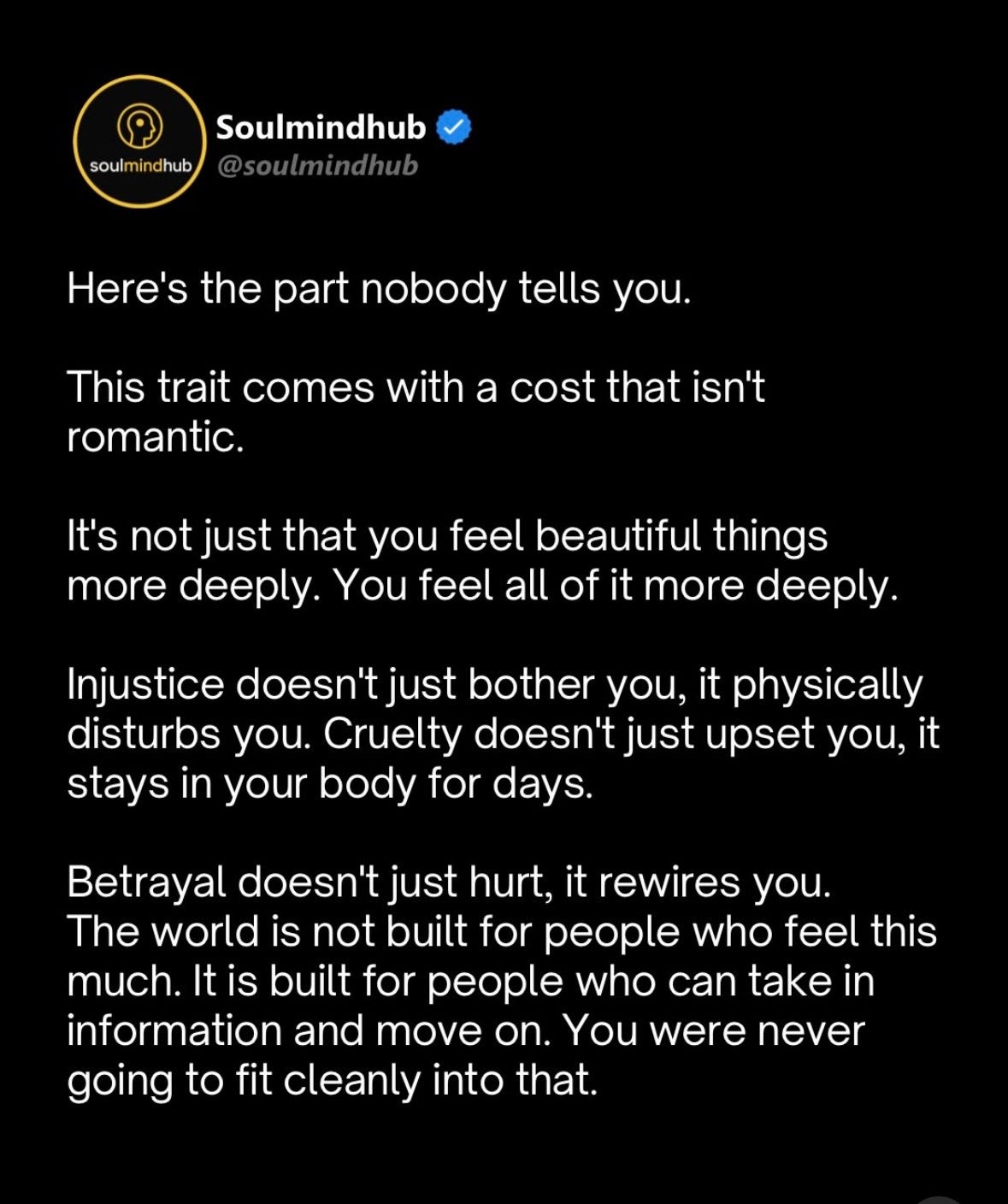
“Cruelty doesn’t just upset you, it stays in your body for days.”
Yes. I physically feel these things in my body. I’ve told you about the kitten who showed up one day in the chicken coop. Tiny, thin, obviously hungry. Since it arrived, I’ve been feeding it and trying to befriend it. It still won’t come near me, but it does come out every morning looking for the bowl of food it knows I will bring.
I cannot do otherwise. It would never occur to me to stop feeding it, and I’m not even a cat person. My neighbor mentioned that our Amish friends up the road also found a kitten the same time we did and that someone probably dumped them because we live so far out in the country.
I can’t even fathom the sick heart of someone who would abandon kittens in the woods. Who does that? Isn’t that what the shelter is for? It makes me physically ill to think about.
I am not a person who can “take in information and move on.” I can’t just forget. I still remember watching a film of John Kennedy’s assassination in high school and how I felt like I couldn’t breathe. I could feel what Mrs. Kennedy was feeling. I still feel that when I think of it.
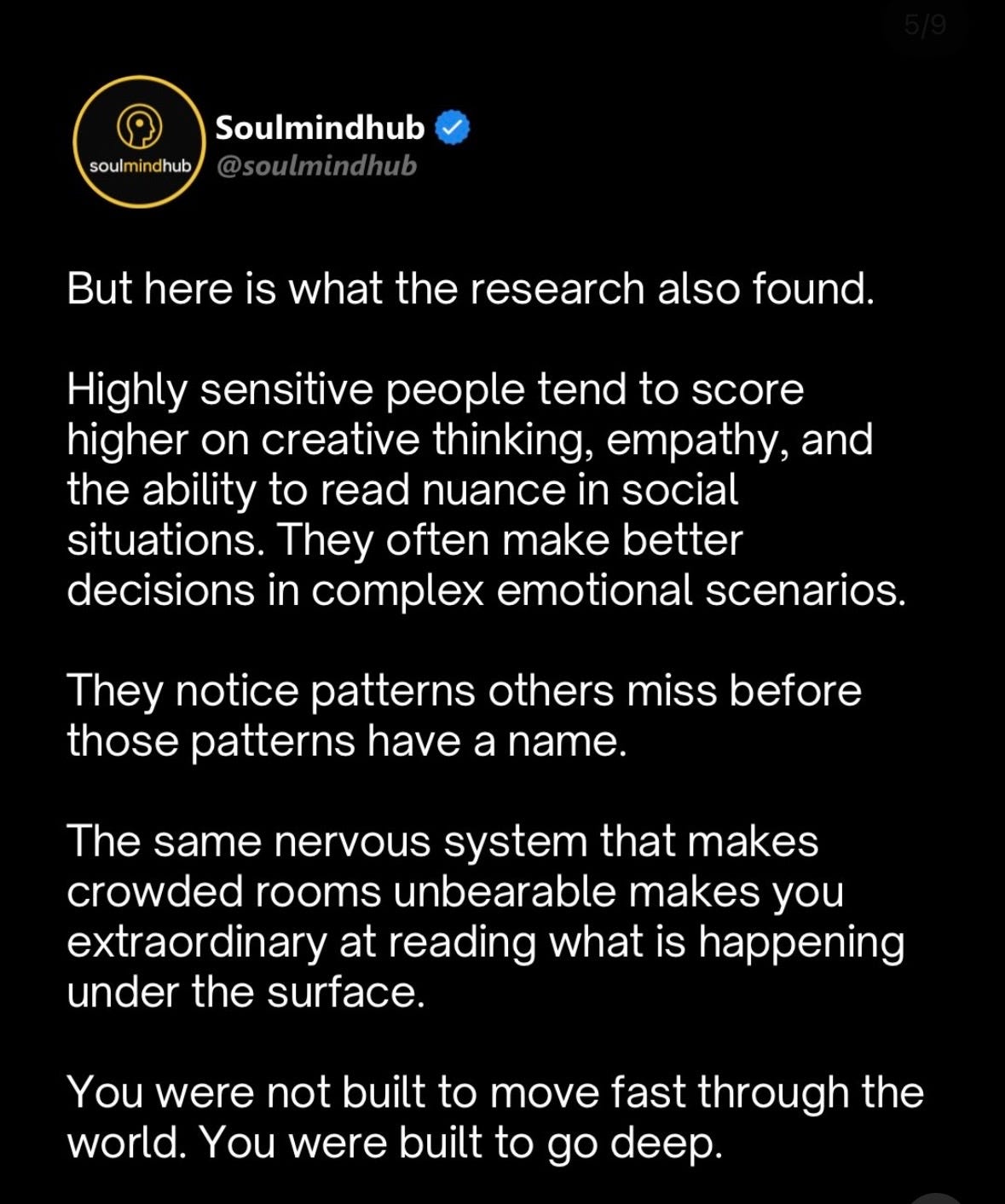
When I was a very new Christian, an older sister told me she thought I had discernment. I had no idea what that was, but it turns out it’s very close to “the ability to read nuance in social situations.” I can read people. I can definitely feel their vibe. I can spot a fake. I have a sensitive creep meter. And I have empathy in spades—often too much.
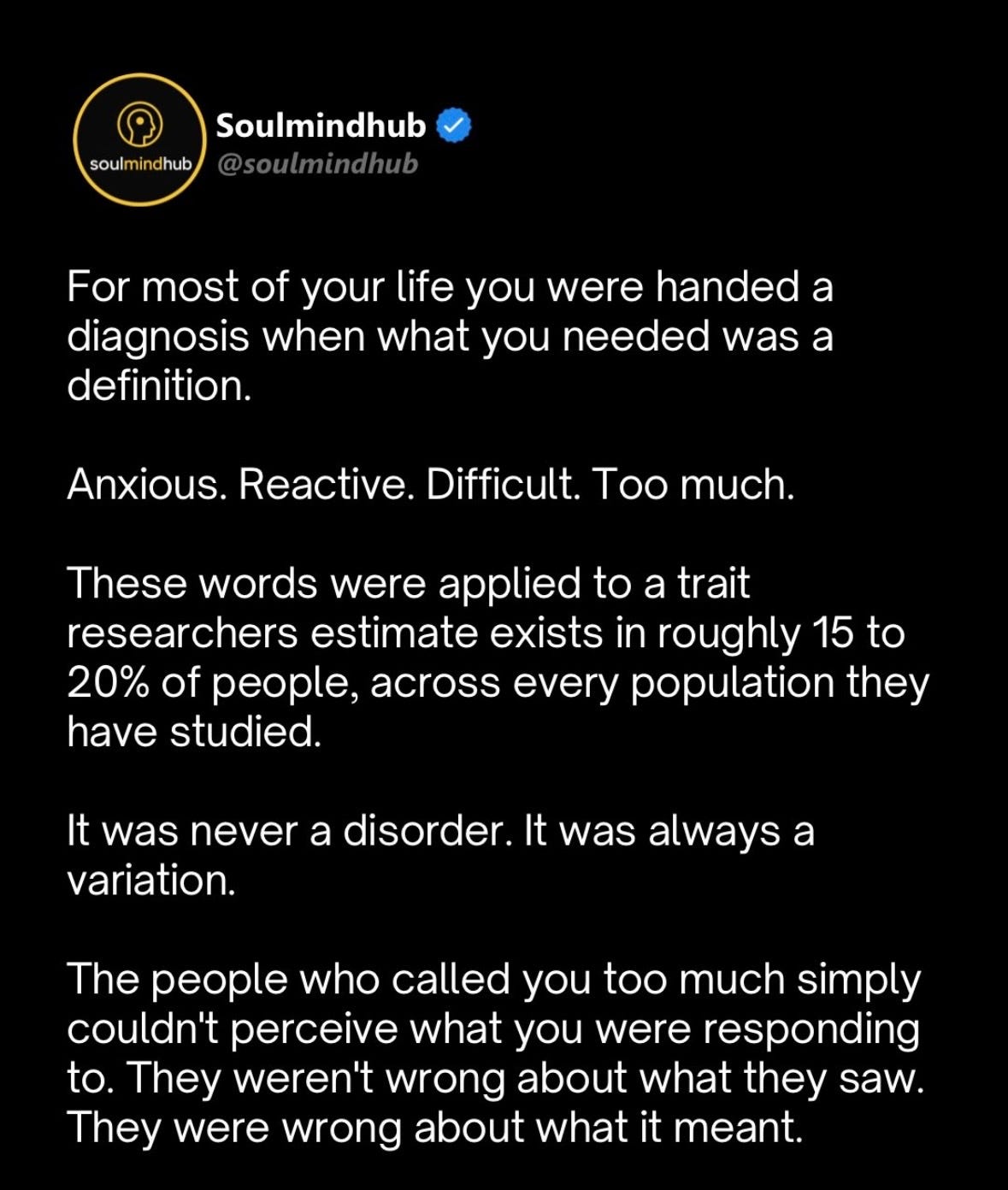
I have definitely received the anxious and reactive diagnoses and been told I am too much, too emotional. And here’s my favorite sentence of this whole thing:
The people who called you too much simply couldn’t perceive what you were responding to.
That’s it right there, in a nutshell. The ones pronouncing you are somehow flawed have no idea how your mind processes the same input theirs allows to flow right on through. They are 100% ignorant, and yet they judge that you are a problem.
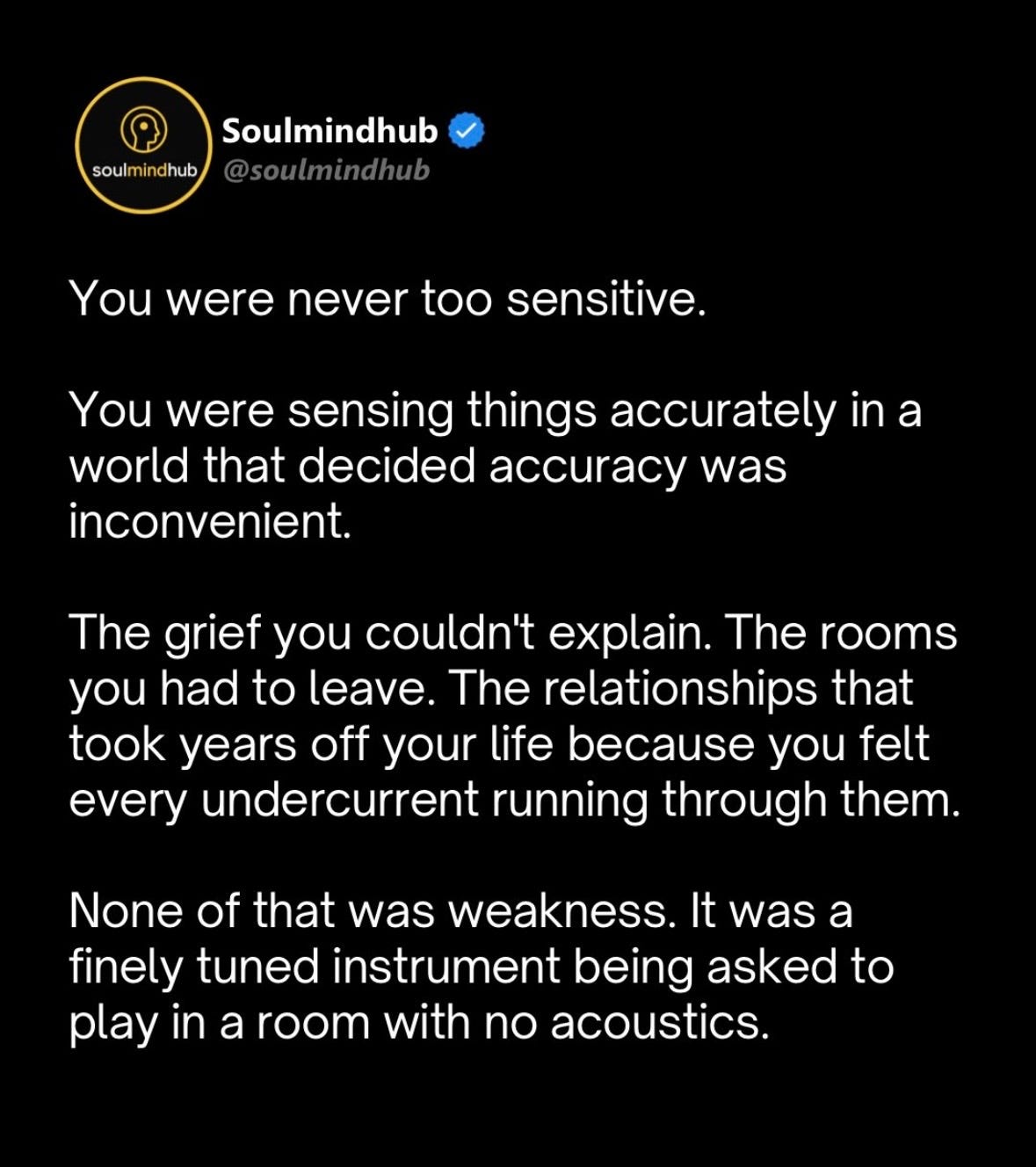
You were sensing things accurately in a world that decided accuracy was inconvenient.
Inconvenient for the ones who cannot perceive what HSPs do.
The grief you couldn’t explain.
Three years ago my father had a stroke and it was the beginning of 14 months of me driving back and forth between my home in South-Central Virginia and theirs in Northern Virginia weekly and sometimes more, rehab for Daddy, moving them into assisted living, various stays in the hospital for both of them, emptying their house to sell it, and eventually losing them both. To say it was a difficult time is a gross understatement.
When it was all over and a small memorial service was scheduled for my mother, I could not go. It wasn’t the drive, it was the overwhelmingness of all I had experienced in that short span of time, and I just could not add one more thing to it. I had spent the last ten days of her life by my mother’s side, and I knew she would understand. I just could not go. That’s grief you can’t explain.
The relationships that took years off your life because you felt every undercurrent running through them.
A family member, a friend, a boss, a coworker. If you’re an HSP, you understand this.
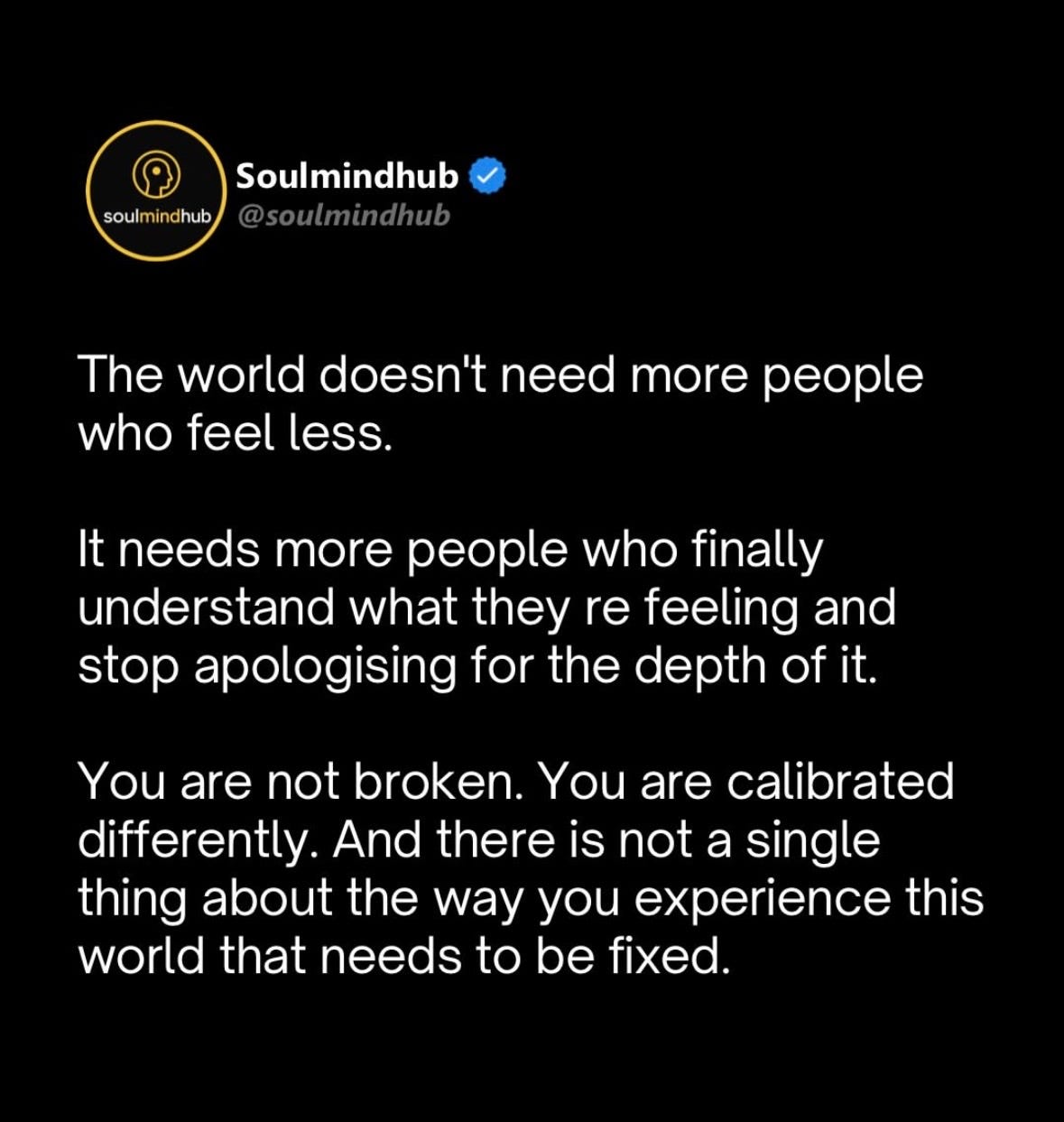
If you’re an HSP, you understand what you’re feeling. You may not be able to name it, but you definitely feel it.
You are not broken or wrong or too emotional. You are calibrated differently. Your input meters are much more finely tuned, and that is both a curse and a blessing. You process both the good and the bad much more deeply than non-HSPs.
If you don’t know if you’re an HSP, you can take the free, quick assessment at hsperson.com.
I wake up every morning and pull the curtains back to see the sunrise over the pasture.

Most mornings it greets me with dazzling pinks and oranges and I slip out onto the deck to take a picture, not because I won’t see another one tomorrow, but because this one right now is filling me with hope and peace—an actual, bodily feeling. Tomorrow’s will too, but there will be time to process that one then.

I’m still processing this one now and it cannot be rushed.